
Fourth Circuit Affirms Judgment in Favor of Grell’s Client
The U.S. Court of Appeals for the Fourth Circuit has affirmed an order entering judgment as a matter of law in favor of Lohman, a California attorney and his law firm who was sued by Navient (the student loan servicing company) under RICO. As plaintiff, Navient claimed that Lohman violated RICO by bringing sham claims against Navient under the Telephone Consumer Protection Act (TCPA). Among other defenses, Jeff asserted that Lohman was immune from liability pursuant to the Noerr-Pennington Doctrine, which governs the First Amendment right to petition the courts. Sham litigation is not, however, protected by the First Amendment.
In August of 2021, a jury returned a verdict in favor of Navient. Lohman brought a post-trial motion for judgment as a matter of law. In granting Lohman’s motion, the district court stated, in part: “… [T]he litigation filed under the [TCPA] …, which the Lohman defendants brought against Navient either as arbitrations or lawsuits, was legitimate, not sham, litigation, and therefore could not support the RICO, tortious interference with contract, and fraud claims for which the jury found defendants liable.” Click here for the full text of the opinion granting the defendants’ motions for judgment as a matter of law.
On October 29, 2024, the Fourth Circuit hear oral argument on Navient’s appeal. Click here to listen to the arguments of counsel.
In an opinion dated May 6, 2025, the Fourth Circuit affirmed the judgment of the district court, stating in part:
Navient explicitly concedes the merits of the TCPA cases. Its complaint alleges that defendants “t[ook] advantage of unsettled legal issues in the TCPA.” … And a Navient executive later confirmed the same, testifying that (a) “courts were split on [the definition of] ATDS” and (b) Navient’s settlement decisions (i.e., 37 settlements totaling over $1,500,000) accounted for its ongoing “win-loss rate.”…
Accordingly, we find that [Lohman] filed a series of actions with regard for the merits, i.e., to adjudicate plausible claims that Navient violated the TCPA. Whether Navient did, in fact, violate the statute is not determinative.… Instead, because defendants pursued a contested issue of TCPA interpretation, they did not engage in sham litigation, and their petitioning activity is immunized under Noerr–Pennington.
Tom Urban was Jeff’s co-counsel.
Court Denies Motion to Dismiss Grell’s RICO Claims against Shein
On, November 8, 2024, Judge Mark C. Scarsi, U.S. District Court for the Central District of California, denied a motion to dismiss filed by Shein, the global clothing retailer, and held that the RICO claims pled by Jeff in the plaintiff’s third amended complaint were actionable. The plaintiff clothing designers allege, among other things, that Shein infringed their designs, produced or caused third-parties to produce knock-offs of those designs in China, resold the infringing designs in the U.S. through the Shein app, and then engaged in a scheme to defraud the designers when they confronted Shein about the infringements and sought recourse. The court held that the plaintiff’s allegations of criminal copyright infringement, mail/wire fraud, and enterprise were sufficiently pled. Click here for the full text of the opinion denying Shein’s motion to dismiss. Jeff Gluck and Antoinette Waller are Jeff’s co-counsel.
Members of the Gambino Crime Family Indicted under RICO
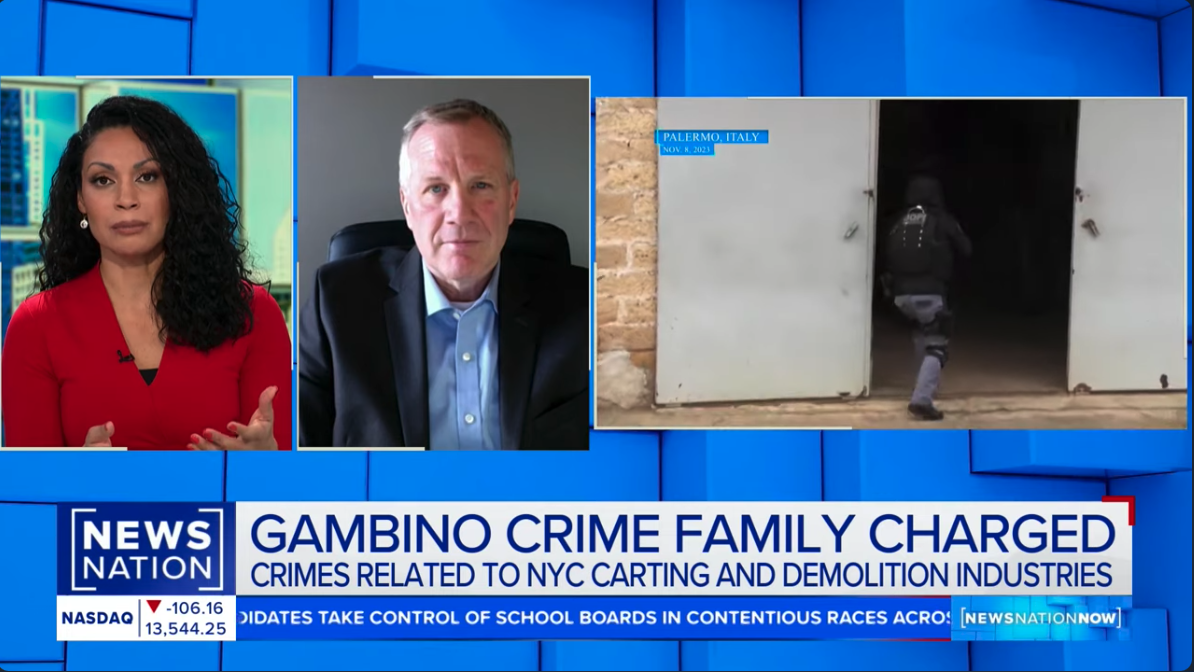
On November 9, 2023, Jeff appeared on NewsNation Now, hosted by Nichole Berlie, to discuss an indictment issued by the U.S. Attorney for the Eastern District of New York. The indictment alleges that several members of the Gambino crime family engaged in extortion, witness intimidation, and union-related crimes in an effort to dominate the New York carting and demolition business. Click here to watch the segment.
Trump Indicted under the Georgia RICO Act
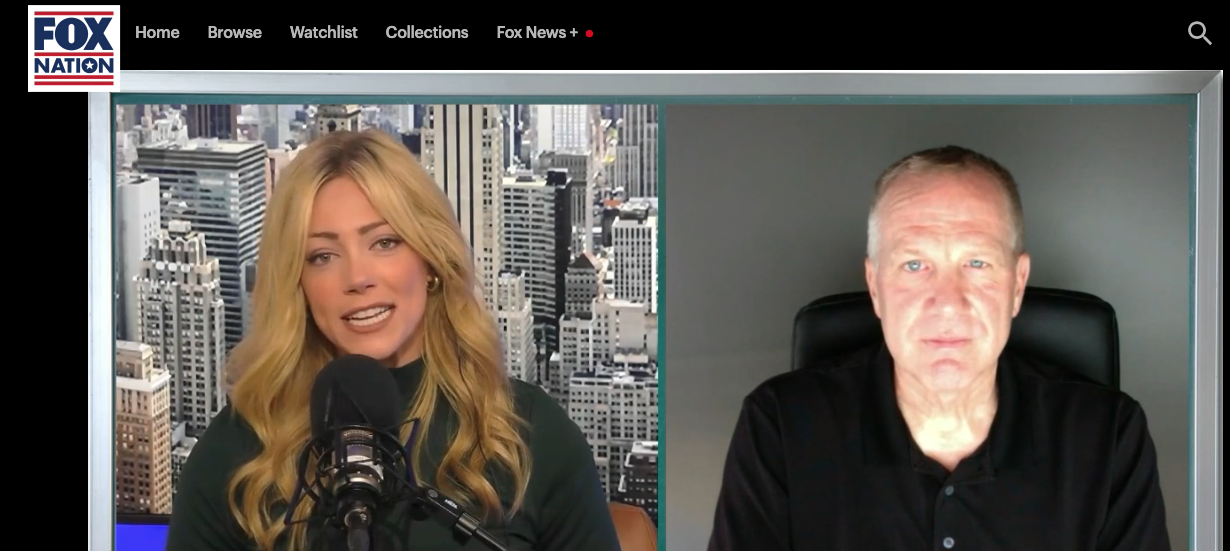
On September 24, 2023, Jeff was a guest on Getting Schooled, a Fox Nation podcast hosted by Abby Hornacek. Jeff talked about the RICO charges against former President Donald Trump, the general history and application of RICO, and RICO as portrayed in Hollywood. To watch the program, click here (Fox Nation subscription required). To listen to the podcast, click here.
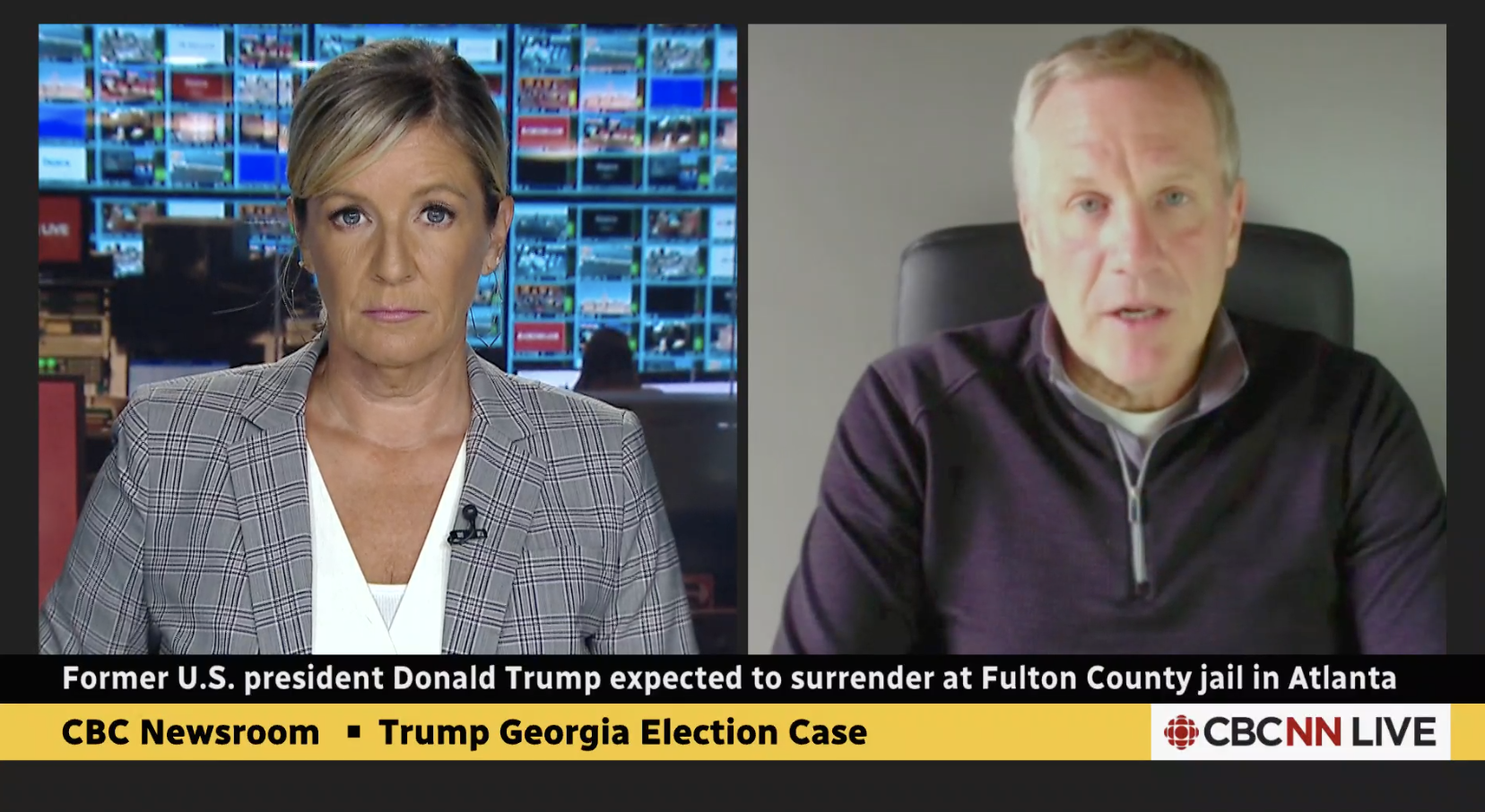
On August 14, 2023, Fani Willis, the District Attorney for Fulton County, Georgia, filed a 41 count indictment against former President Donald Trump and 18 other individuals. One of those counts was under the Georgia RICO statute. Click here to watch Jeff’s interview with the Canadian Broadcasting Corporation.
Click here to watch WCCO’s segment summarizing RICO and its use in Georgia against Trump.

Click here to listen to Jeff’s more comprehensive interview with SiriusXM POTUS.
RICO and Gang Violence in Minneapolis
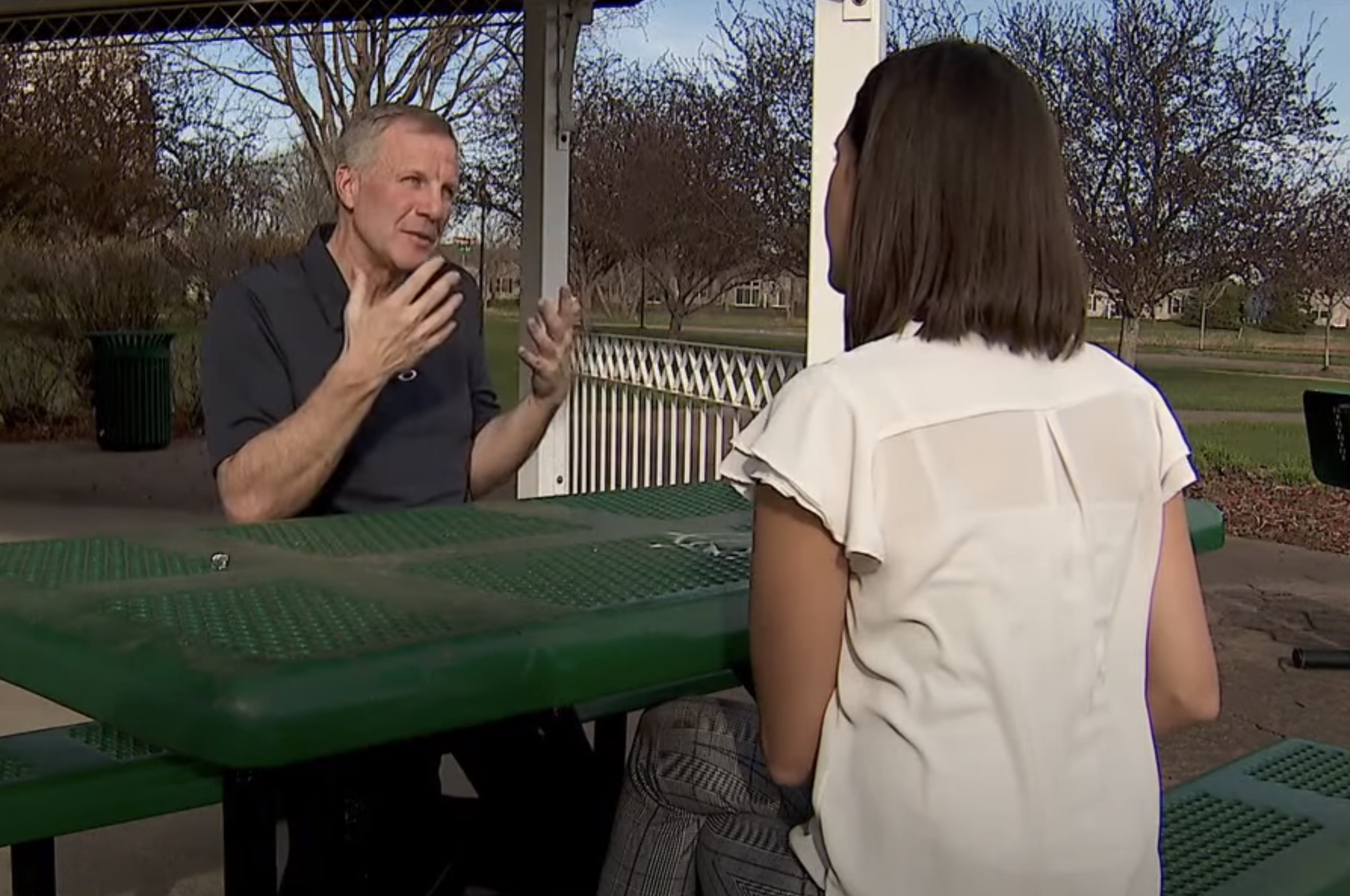
On May 3, 2023, the U.S. Attorney for Minnesota indicted 45 alleged gang members under RICO. Since then, the media has been interviewing Jeff about the historical context of the RICO statute.
Click here to watch the story that aired on KARE 11.

Click here to watch the story that aired on Fox 9 News.
RICO and Donald Trump
On the October 4, 2022 episode of Atlanta Journal Constitution’s Podcast – Breakdown, Jeff and other legal minds discussed whether Donald Trump is likely to be charged under Georgia’s RICO statute. Click here to listen:

Jeff Grell, a lawyer who specializes in racketeering cases, said Trump may have waited too long in bringing his racketeering claims. Civil racketeering claims are governed by a four-year statute of limitations, Grell said, but there is usually a big dispute about when that four-year period begins to run. Donald Trump Sues Hillary Clinton Over 2016 Russian Collusion Allegations, Reuters (March 25, 2022).
Victory in the Southern District of Florida
– Platinum Prop. Inv. Network. v. Charles Sells, et al.
On September 1, 2022, a jury awarded $3 million in actual damages on the plaintiffs’ RICO claim. The plaintiffs, Jeff’s clients, alleged that the defendants hijacked the plaintiffs’ website traffic through a pattern of service mark infringement, false emails, counterfeit websites, and other acts of unfair competition. Click here to see the verdict form. In denying an earlier motion to dismiss the RICO claim, the Court found that the plaintiff had pled both an association-in-fact and legal entity enterprise and that the pattern pled by the plaintiff was sufficiently continuous pursuant to the doctrine of fortuitous interruption. Click here for the full text of the opinion denying the defendant’s motion to dismiss. Steven Pollack was plaintiffs’ lead counsel throughout the litigation.
Grell’s RICO Claims Survive Summary Judgment; Court OK’s for Trial
– Kruse v. Repp, et al.
On June 15, 2021, the Honorable Stephanie M. Rose denied the defendants’ motions for summary judgment on RICO claims brought by Mr. Grell’s client in the Southern District of Iowa. A judgment debtor caused a horrific car accident that resulted in permanent and substantial injury to the plaintiff. The plaintiff obtained a seven-figure judgment against the debtor. The plaintiff claims that the defendants (a bank and a law firm) participated in a scheme to fraudulently conceal the assets of the judgment debtor. The Court found that the evidence, when viewed in a light most favorable to the the plaintiff, could prove all of the elements of a substantive RICO claim and plaintiff’s civil standing. Click here for the full text of the court’s summary judgment decision. Click here for the full text of an earlier opinion denying the defendants’ motions to dismiss.
Ninth Circuit Reverses Dismissal of RICO Claims
– Bui v. Nguyen, et al.
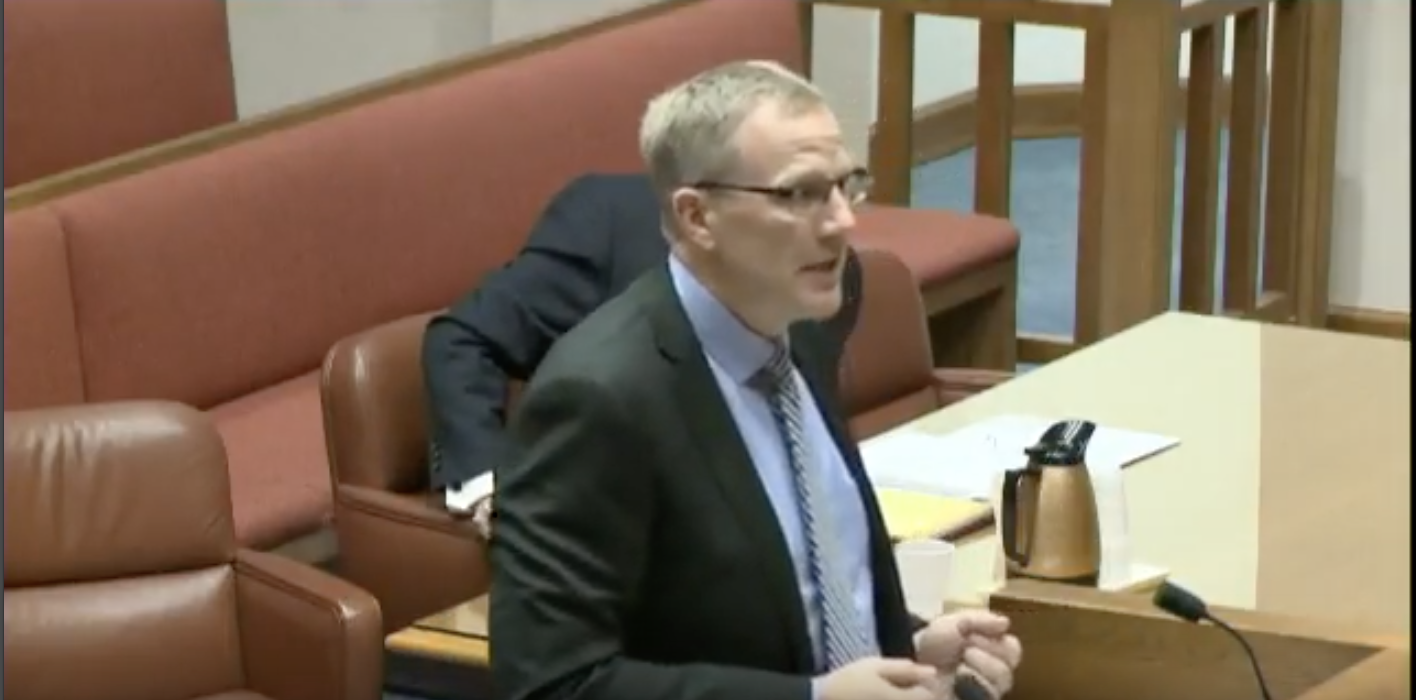
On October 2, 2107, Jeff Grell appeared before the U.S. Court of Appeals for the Ninth Circuit on behalf of Mai Bui, a 79 year-old California woman who was defrauded out of nearly $6 million she won in the lottery. The Ninth Circuit argument focused on whether the defendants’ activities possessed sufficient continuity to constitute a pattern of racketeering. Click here to watch a video of the argument. On October 17, 2017, the 9th Circuit issued its opinion, reversing the district court’s dismissal of Ms. Bui’s claim and granting leave for Ms. Bui to file an amended complaint. Click here to read the opinion.
No Domestic Injury – RICO Claims Against Grell’s Client Dismissed
– Exeed Ind., LLC v. Younis
On November 8, 2016, the Honorable James B. Zagel dismissed RICO claims brought against Mr. Grell’s client in the Northern District of Illinois. The court dismissed the RICO claims because the plaintiffs did not suffer a “domestic injury” arising out of an alleged scheme that occurred abroad. Click here for the full text of the opinion dismissing the RICO claims. On February 10, 2017, the court dismissed the plaintiffs’ remaining state law claims for want of subject matter jurisdiction.